
Is your Cold Store Cooling Products… or Empty Space?
Every Cubic Metre you Cool Costs Money. The Question is: Are you Cooling Inventory or Empty Air?
Cold Storage Facilities are among the Most Expensive Warehouse Environments to Operate. While Electricity Tariffs continue to Rise, Refrigeration Systems often run 24 Hours a Day, 365 Days a Year, making Energy one of the Largest Operational Expenses for Food Producers, Exporters, Distributors, and Cold Chain Logistics Companies.
When businesses look to Reduce these Costs, they usually focus on Refrigeration Equipment, Insulation, or Solar Installations. Yet one of the Biggest Opportunities for Energy Savings is often Hiding in Plain Sight — the Warehouse Layout itself.
The More Unused Space your Refrigeration System has to Cool, the More Energy it Consumes. Every Unnecessary Aisle, Oversised Access Lane, or Underutilised Storage Channel represents Refrigerated Volume that adds Cost without Increasing Storage Capacity.
The question isn’t simply How Efficient your Refrigeration System is. It’s how Efficiently you’re Using the Space Inside it.
Why Traditional Cold Storage Layouts become Expensive
Conventional Pallet Racking provides Excellent Accessibility but often requires Multiple Forklift Aisles throughout the warehouse. While those Aisles are Necessary for Forklift Movement, they also Reduce Storage Density and Increase the Refrigerated Air Volume inside the Facility.
This Creates Several Challenges:
- Higher Refrigeration Costs.
- Fewer Pallet Positions within the Same Building
- Increased Forklift Travel Distances.
- Longer Loading and Unloading Times.
- Higher Labour and Equipment Costs.
- Reduced Overall Warehouse Productivity.
In many Cold Storage Operations, Businesses reach Capacity long before they Run Out of Building Space
Bigger Cold Store… or Smarter Cold Store?
When Warehouse Capacity becomes Limited, the First Instinct is often to Expand, but Expanding a Refrigerated Warehouse is Expensive. Construction Costs, Refrigeration Infrastructure, Insulation, Flooring, Permits, and Operational Disruption all contribute to a Significant Capital Investment.
Before Increasing your Building Footprint, it’s worth asking a different question: “Could your Existing Cold Store simply Store More?”
High-Density Storage Systems allow Businesses to Unlock Additional Pallet Positions within their Existing Warehouse by making Better Use of Available Volume instead of Building More Space.
How LSE's Pallet Shuttle Changes the Equation
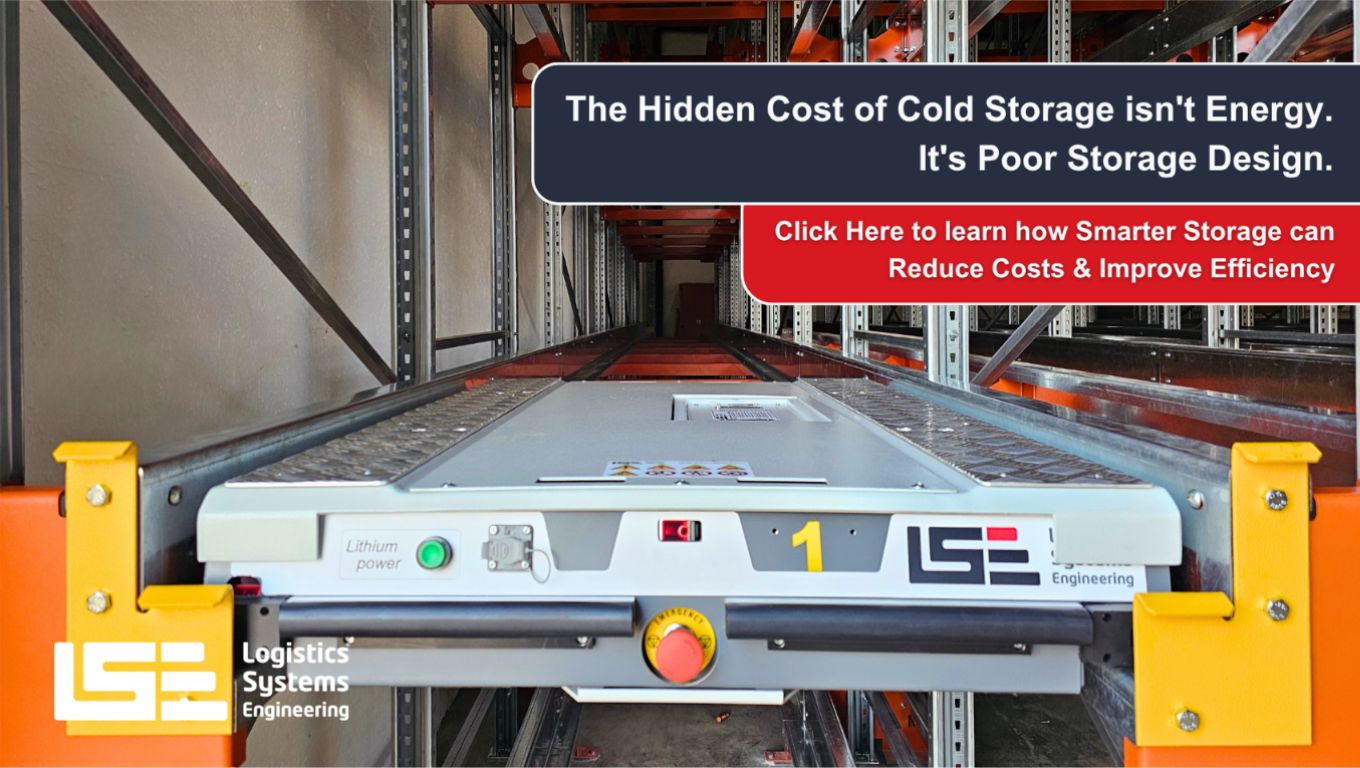
LSE’s Pallet Shuttle System is designed specifically for High-Density Warehouse Environments where Storage Capacity, Throughput, and Operational Efficiency are Critical.
Instead of Forklifts travelling Deep into Storage Lanes, LSE’s Pallet Shuttle Transports Pallets Automatically through the Storage Channels. Forklifts remain at the Aisle Entrance, where Pallets are Loaded or Retrieved, Reducing Unnecessary Travel while Improving Productivity.
The Result is a Warehouse that can:
- Increase Storage Density using Deep-Lane Storage.
- Reduce Forklift Traffic inside the Racking.
- Improve Pallet Handling speed.
- Support both FIFO and LIFO Inventory Strategies.
- Operate Reliably in Chilled and Frozen Environments down to -30°C.
- Reduce the Refrigerated Air Volume required per Pallet Stored.
For many Cold Storage Facilities, this Translates into More Pallet Positions without Expanding the Warehouse Footprint.
Every Additional Pallet Position Improves your Return
High-Density Storage isn’t only about Fitting More Pallets into a Warehouse. It’s about Improving the Return on Every Cubic Metre you already own.
When More Inventory fits inside the Same Refrigerated Space, Businesses benefit from:
- Better Utilisation of Expensive Cold Storage Facilities.
- Lower Energy Consumption Per Pallet Stored.
- Faster Product Movement.
- Reduced Congestion.
- Improved Operational Efficiency.
- Greater Flexibility During Seasonal Demand Peaks.
For Industries like Fruit and Vegetable Exports, Frozen Foods, Meat Processing, Pharmaceuticals, and Beverage Production, these Improvements can have a Measurable Impact on Operating Costs.
Designed for Growing Cold Chain Operations
As Supply Chains become Faster and Customer Expectations continue to Increase, Cold Storage Operators face Growing Pressure to Improve Throughput without Compromising Product Quality. Automation no longer needs to mean Fully Automated Warehouses.
Semi-Automated Storage Solutions such as LSE’s Pallet Shuttle offer a Practical Step towards Warehouse Automation while Delivering Immediate Improvements in Storage Density, Safety, and Productivity. It’s an Investment that Supports Today’s Operation while Preparing your Warehouse for Tomorrow’s Growth.
Ready to Maximise Your Cold Storage Capacity
Many Businesses believe Rising Refrigeration Costs are Simply Part of Operating a Cold Store. Often, they aren’t. Sometimes the Biggest Energy Expense isn’t the Refrigeration Equipment itself. It’s the Empty Space you’re Paying to Cool Every Single Day.
If you’re planning a New Cold Store, Upgrading an Existing Facility, or Looking to Increase Pallet Capacity without Expanding your Warehouse, LSE’s Pallet Shuttle System can help you Maximise Storage Density while Improving Throughput, Reducing Forklift Travel, and Lowering Operational Costs.
Contact LSE Today to discover how much More your Cold Store could Achieve with Intelligent High-Density Pallet Storage.